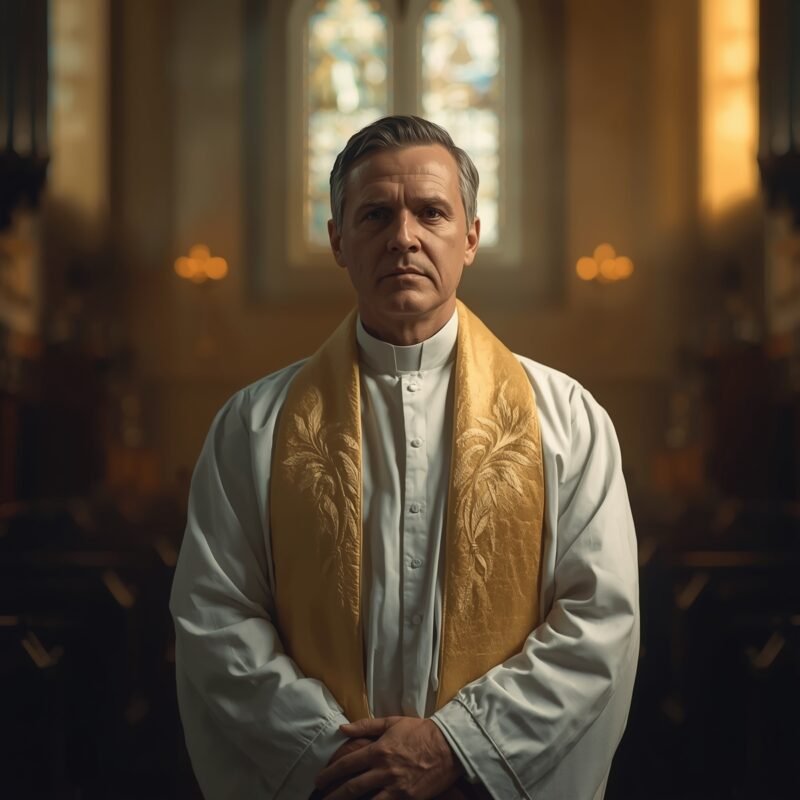

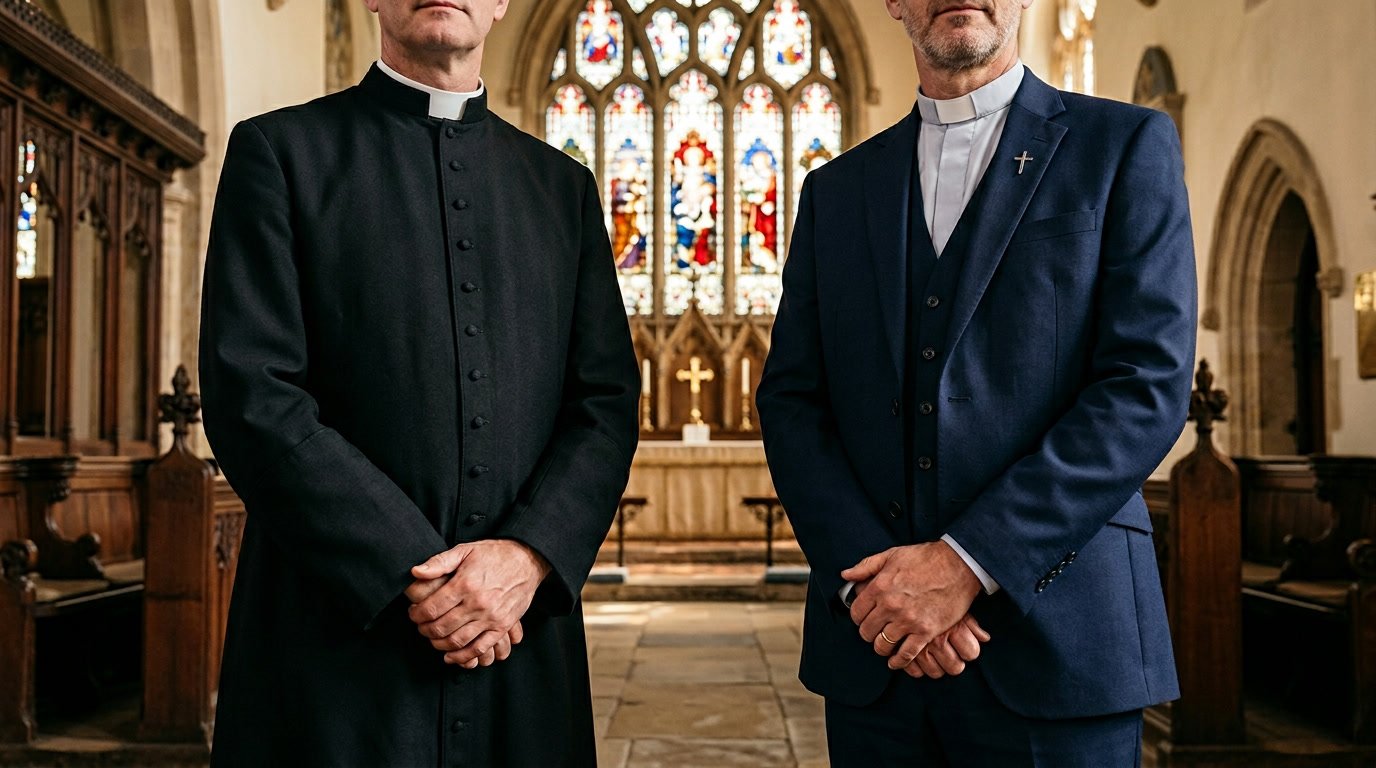
The words ‘pastor’ and ‘priest’ are often used interchangeably in everyday conversation, but within the church, they carry distinct meanings that vary considerably across Christian traditions. Understanding the difference matters not just for theological reasons — it also shapes what these leaders wear, how they lead, and what their relationship is to the congregation they serve.
Whether you are preparing for ordination, choosing clergy attire for the first time, or simply trying to understand the role you are stepping into, this guide explains the key differences between a pastor and a priest, why they exist, and what each one typically wears in ministry.
What You Will Find in This Guide
What Is a Priest?
The word ‘priest’ derives from the Greek ‘presbyteros’, meaning elder. In Christian theology, a priest is an ordained minister who acts as a mediator between God and the people — performing sacraments, offering sacrifice (in traditions that understand the Eucharist as sacrificial), and administering the rites of the church.
Priests are most commonly associated with Catholic, Orthodox, Anglican, and Episcopal traditions. In these traditions, ordination confers a specific sacramental role that sets the priest apart from the laity in a formal and often irreversible way. A Catholic priest, for example, is ordained through the Sacrament of Holy Orders and is understood to act ‘in persona Christi’ — in the person of Christ — when celebrating Mass.
The priestly role is deeply tied to liturgical practice. Priests preside over the Eucharist, hear confessions, and anoint the sick. In many traditions, the local bishop oversees and authorises their ministry in a specific parish or diocese.
The vestments worn by priests are among the most theologically layered garments in Christianity — our clergy vestments guide explains every major vestment type, its history, and when it is worn.
What Is a Pastor?
The word ‘pastor’ comes from the Latin for shepherd. A pastor is a Christian minister responsible for the spiritual care, teaching, and leadership of a congregation — leading, feeding, and protecting the flock, as the metaphor implies.
Pastors are most commonly associated with Protestant traditions, including Baptist, Methodist, Lutheran, Presbyterian, Pentecostal, and non-denominational churches. In these traditions, ordination or licensing as a pastor recognises a person’s calling and gifts for ministry. Still, it does not necessarily confer the same sacramental status as priestly ordination in Catholic or Orthodox theology.
The pastoral role tends to emphasise preaching, teaching, and community care. Pastors typically lead Sunday services, preach from the scriptures, provide counselling and pastoral support to congregation members, and oversee the church’s overall spiritual direction.
Key Differences Between a Pastor and a Priest
The distinction between the two roles comes down to four main areas: theology, tradition, authority, and function.
| AREA | PRIEST | PASTOR |
|---|---|---|
| Tradition | Catholic, Orthodox, Anglican, Episcopal | Baptist, Methodist, Presbyterian, non-denominational |
| Ordination | Sacramental — confers specific priestly powers | Functional — recognises gifting and calling |
| Primary Role | Liturgical — presides over sacraments | Teaching and pastoral — preaches and shepherds |
| Authority Structure | Hierarchical — bishop, priest, deacon | Congregational or denominational governance |
| Celibacy | Required in Catholic tradition; optional in Anglican/Orthodox | Not typically required |
| Title | Father (Catholic), Reverend or Vicar (Anglican) | Pastor, Reverend, or Minister |
It is worth noting that in some traditions — particularly Anglican and Episcopal — the same person may hold both titles. An Anglican vicar is an ordained priest who also functions as the pastor of a parish. The distinction is not always binary; it is shaped by tradition and context.
What a Priest Wears — Vestments and Robes Explained
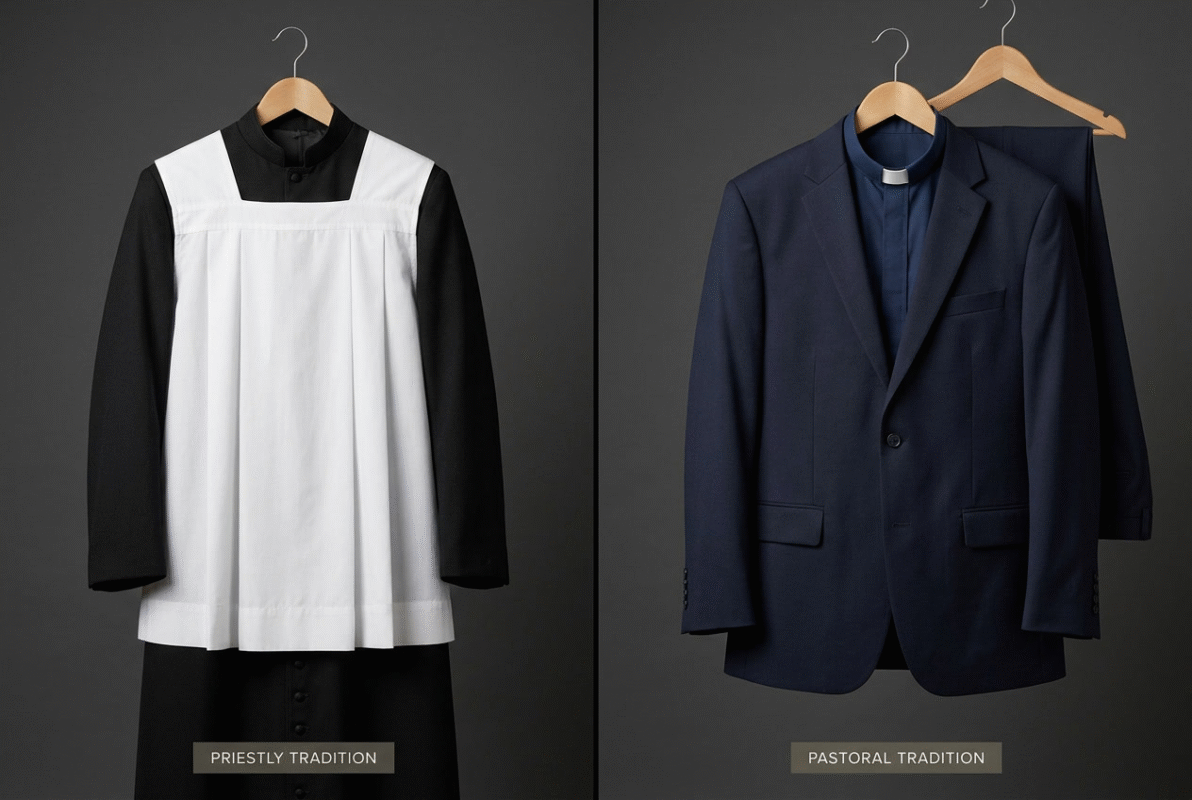
The priestly dress is one of the most immediately visible markers of the role. Catholic, Orthodox, and high Anglican priests typically wear a layered system of liturgical vestments that has evolved over nearly two thousand years.
Everyday Clerical Dress
Outside of liturgical services, priests in many traditions wear a black cassock as their basic clerical garment. The cassock reaches to the ankles and is worn with a clerical collar. Catholic priests may also wear a ferraiolo — a long black cape — for formal occasions. The colour of the cassock can indicate rank: black for priests, purple for bishops, red for cardinals, and white for the Pope.
Liturgical Vestments
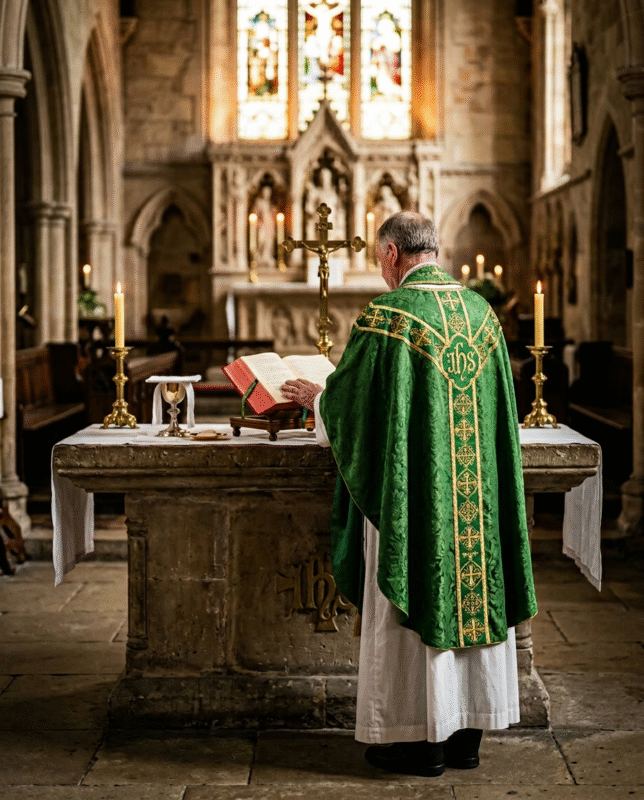
During Mass or formal services, a Catholic or high Anglican priest typically wears an alb (the long white base robe), a stole (a narrow liturgical scarf worn around the neck), and a chasuble (the large outer vestment worn over the alb). The colour of the chasuble changes with the liturgical season: purple for Advent and Lent, white for Christmas and Easter, red for Pentecost, and green for Ordinary Time.
Anglican and Episcopal priests may also wear a surplice over a cassock for non-Eucharistic services such as Morning Prayer or Evensong. This shorter white garment is one of the most recognisable items of Anglican clergy dress. From traditional cassocks to contemporary albs, you can explore the full range of styles and fabrics in our dedicated collection of clergy robes for men.
What a Pastor Wears — From Robes to Clergy Shirts
Pastoral dress is significantly more varied than priestly vestments and depends heavily on the tradition, the formality of the service, and the personal style of the minister.
The Geneva Gown
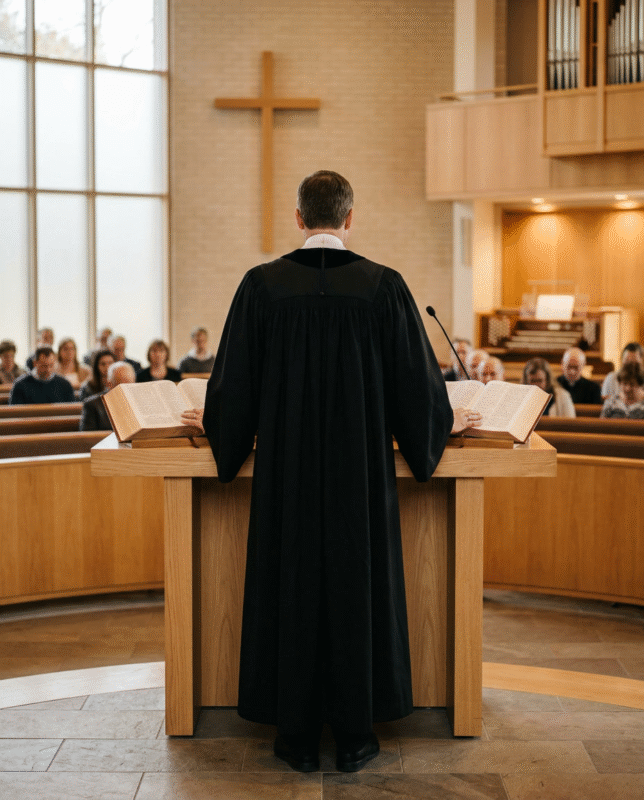
Many Reformed, Presbyterian, and Baptist pastors wear a Geneva gown for preaching services — a long black academic-style robe named after the Swiss city where John Calvin adopted it as appropriate dress for Reformed ministers. The Geneva gown reflects the theological conviction that the minister is primarily a preacher of the Word rather than a liturgical officiant.
Clergy Shirts and Suits
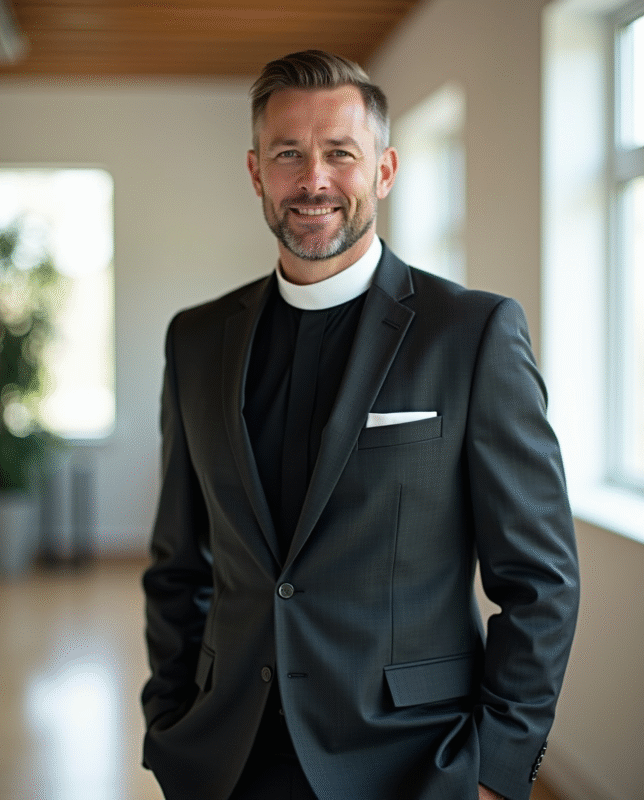
Evangelical, Pentecostal, and many non-denominational pastors often minister in clergy shirts — shirts with a distinctive clerical collar — paired with a suit or trousers. This reflects a more informal approach to ministerial dress that prioritises relatability and accessibility over liturgical formality.
A well-fitted clergy suit communicates professional authority and pastoral dignity without the full liturgical weight of a cassock or vestment set. Many pastors use clergy suits for both Sunday services and pastoral visits throughout the week. A well-fitted clergy suit is one of the most versatile investments a pastor can make — browse our full range of clergy suits for men designed for both Sunday services and weekday pastoral work.
Can the Same Person Be Both a Pastor and a Priest?
Yes — in some traditions, particularly Anglican and Episcopal. An Anglican vicar or rector is an ordained priest who serves as the pastor of a parish. They fulfil both roles simultaneously: celebrating the Eucharist and other sacraments as a priest, and leading, teaching, and caring for the congregation as a pastor.
In Catholic tradition, all priests are understood to have a pastoral dimension to their ministry — but the term ‘pastor’ is specifically reserved for the priest appointed to lead a parish. The parish priest (or ‘pastor’ in American Catholic usage) is responsible for the spiritual care of all registered parishioners.
In Protestant traditions, some ministers refer to themselves as both pastors and priests — particularly in traditions influenced by the theology of the ‘priesthood of all believers’, which holds that all Christians share in a royal priesthood and that the ordained minister’s role is to equip the whole congregation for ministry.
Choosing the Right Clergy Attire for Your Role
The garments you wear as an ordained minister reflect your tradition, your theology, and your congregation. There is no single right answer — but there are principles that help guide the decision.
- If you serve in a liturgical tradition — Catholic, Anglican, Orthodox, or Lutheran — your denomination will likely have specific guidance on the vestments appropriate for different services and occasions. Start with the garments required for the services you lead most frequently.
- If you serve in a Protestant or non-denominational tradition, your attire choices are more flexible. Consider what communicates both your authority and your accessibility to the congregation you serve.
- If you preach regularly, a well-fitted Geneva gown or a quality clergy suit will serve you well for most occasions. Choose a fabric and weight appropriate for your climate and the length of your typical service.
- For liturgical ministers, the cassock and surplice combination is a reliable foundation that works across Anglican, Lutheran, and many other traditions.
Understanding exactly what sets these two roles apart starts with the garments they wear — for a broader introduction to what ministers across all traditions wear and why, read our complete clergy attire guide.
Final Thoughts
The distinction between a pastor and a priest is one of the most commonly misunderstood aspects of Christian ministry. At its core, it is a distinction rooted in theology, tradition, and function — not in personal holiness or spiritual authority. Both roles carry profound responsibility, and both deserve to be dressed with care, intentionality, and respect for the tradition they represent.
Whether you are stepping into ordained ministry for the first time or upgrading your ministry wardrobe after years of service, Worship Attires carries a dedicated collection of clergy robes, vestments, suits, and attire for every tradition and every role. For female ministers navigating the same choices — from vestments and robes to suits and everyday clerical dress — our growing collection of women’s clergy robes covers every tradition and style.