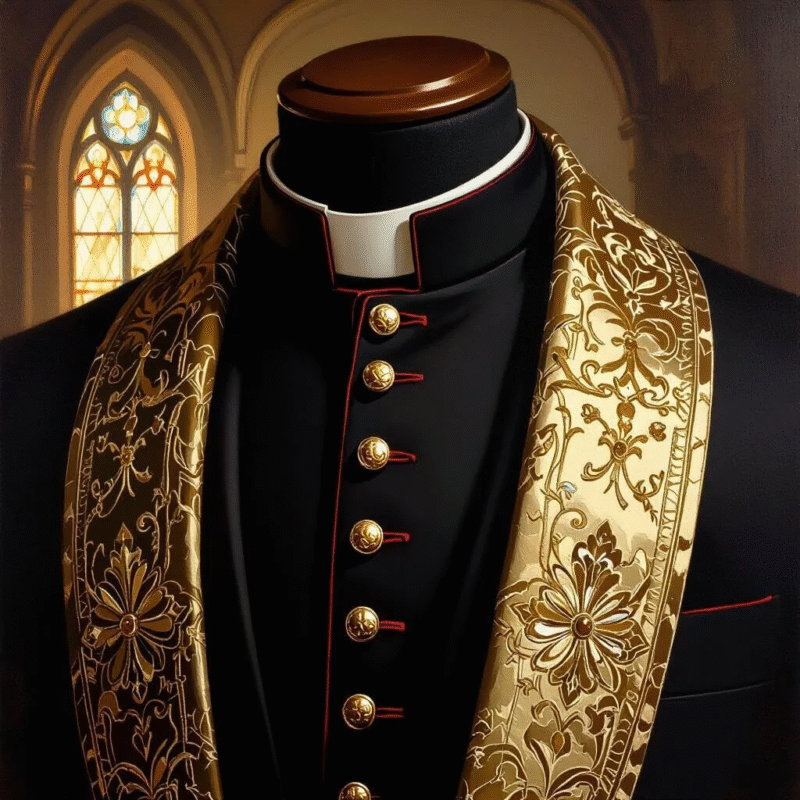


For hundreds of years, clergy attire has been a silent yet powerful proclamation of the worshiper’s state of mind and the church’s attitude. The clergy apron, among the attire, is a subtle yet significant symbol, yet it makes a loud presence in church vestments. The apron, besides its lavish technique and grand folds, conveys a spiritual message that is deeply intertwined with the values of service and sacred duty.
In these times, when there is a greater appreciation for classical pieces, the clergy apron is at the forefront of maintaining traditional practices with great dignity and quietness, embodying the essence of every servant of faith.
The Clergy Apron’s Origin: A Sign of Sacred Service
The clergy apron is closely tied to the beginning of ministry, when a trend emerged of creating garments that were both formal and functional. In ancient Christian times, an apron was the sign of a servant’s readiness—reflecting Jesus’ attitude of “not coming to be served, but to serve”.
This garment of symbolism found a place in the formal dress codes of Anglican, Methodist, and Episcopal traditions. The meekness of its design—a long piece, usually black or grey, reaching to the knees—was reminiscent of the early priests who combined faith and function. Even today, it stands as a silent testament to the fact that spiritual leadership originates from the bottom up, beginning with humble service.
Design, Craftsmanship, and the Spiritual Aesthetic
The nice thing about a clergy apron is the way it confuses the tailors, making clergy wear have an almost religious approach to the apron. They are aware of the deep meaning behind it. They also maintain masterly levels of precision in every pleat and line, and they create a masterful, understated elegance in the combination of cassocks, surplices, or clergy robes.
At Worship Attires, artisans preserve this harmony of tradition and modernity through carefully curated Clergy Aprons for Men and women. Each apron is made from materials that are not only strong but also elegant, such as wool and sometimes polyester, allowing them to be worn comfortably during long hours of ministry and ceremony.
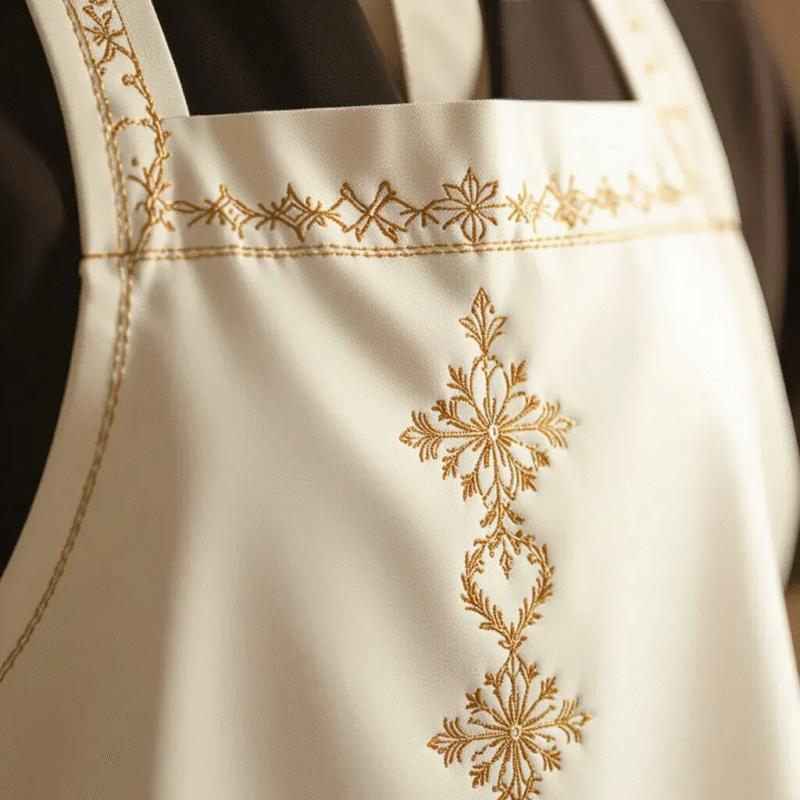
The meticulousness with which the design is carried out represents the spiritual involvement: humble but respectable, modest yet purposeful. The apron worn during the daily liturgical services or the special occasion does not cease to be a symbol of the divine work that is done ‘behind the pulpit’.
Hidden Symbolism: The Apron as a Garment of Humility
The priests’ apron is a piece of clothing with profound significance that extends far beyond the material used to make it. In theological contemplation, it is a symbol of humility, service, and spiritual discipline—the three virtues essential to ministry. Like a servant’s apron, it indicates the owner’s readiness to share the load with love and honesty.
Many clergy members consider the apron to be a tangible symbol of their commitment to lead through the church’s good works and faith. The donning of the apron by a clergy person before service is not only a silent prayer but also a sign that every sermon, blessing, and action is done for God and the congregation as a service.
In Anglican and Methodist circles, the apron also conveys order and continuity—an acknowledgment of the centuries of ecclesiastical vestments that have changed in form but not in spiritual significance. It silently asserts the sacred connection between the ministers of the past and the present, and thus, the present-day clergy is linked to the history of faithful service.
The Apron’s Role in Modern Ministry
The clergy aprons are still associated with a significant role in modern worship places. While some contemporary church garments prefer simplicity or stylistic innovation, the apron remains the quintessential acceptance of those who appreciate both comfort and tradition. It enriches the aesthetics of the formal Clergy Robes for Women and men’s vestments with an elegant finish, thereby imparting a symbolic balance to the whole outfit.
The apron, for clergy who travel frequently or perform pastoral work, is both a utility and a symbol—easy to put on, looking dignified, and closely linked to the ministry’s mission. It is a sign of commitment not only to the outward appearance but also to the inward spirit of servanthood.

Pairing the Apron with Traditional Vestments
A properly fitted apron can be very complementary to other vestments, such as cassocks, rochet, and surplices. If you thoughtfully pair it with an outfit, it will convey the prevailing faith and identity. The black aprons are the most common ones, denoting deep devotion. In contrast, white or grey ones are normally used during the liturgy or at least signify purity and reverence in such settings.
Those who wish to have garments that are both elegant and spiritually significant can check Robes & Cassocks for Men and other specially selected vestments at Worship Attires. The pieces in the collection are all made with utmost care for church heritage and devotion, allowing every cleric to wear dignified attire that reflects their calling.
The Evolution of Clergy Attire: Honoring Heritage in a Modern World
The apron of the clergy has its own sacred meaning, but it has also been a symbol of the larger development of church attire—how once service garments have adapted to the modern world, while still retaining their essence. Today in ministry, it is not only the blending of the traditional and the contemporary in the matter of vestments that speaks to the spiritual truth of faith that is both timeless and ever renewing.
The clergy of today are not just people who wear clothes; they are the ones who give meaning to life. Every stitch, fold, and button of their garments bears the marks of centuries of dedication, prayer, and artistic reverence. Through collections such as the Clergy Aprons for Women, the faithful can wear clothes that not only recall sacred history but also fit the modern worship atmosphere.
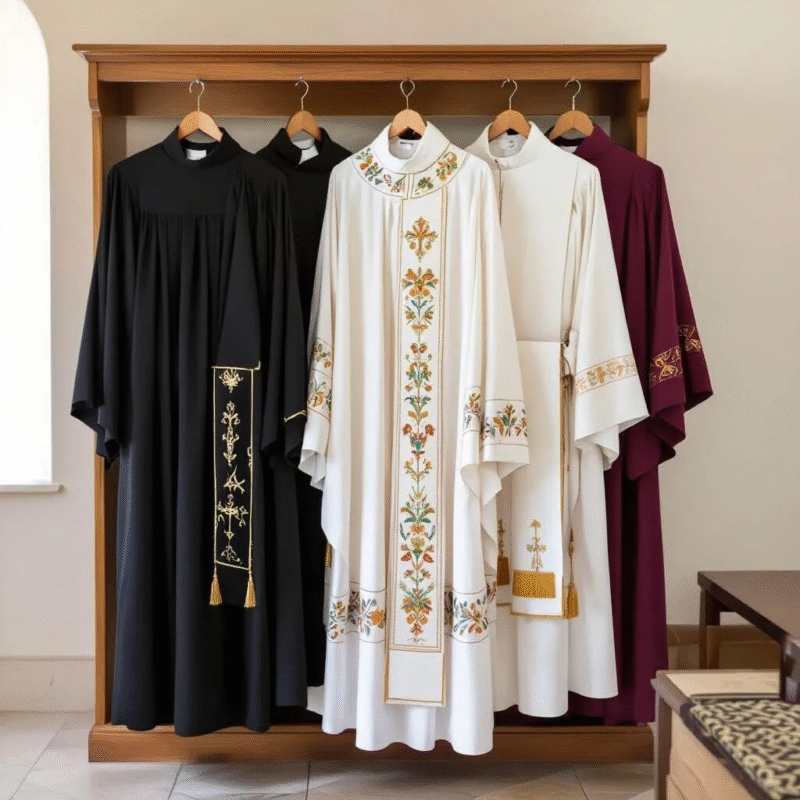
A Reflection of Service and Divine Grace
The clergy apron might look plain at first glance, but its story is one of great humility and sacredness. It is not just a part of the minister’s uniform; it is a promise of service, an expression of faith, and a silent homage to the unending goal of ministry.
When each minister gets ready for worship, the act of putting on the apron transforms into a sacred ritual—signifying the willingness to serve God and humanity with love, purity, and grace. In every epoch, it remains a gentle reminder that the first step to leadership is service and that the greatest beauty lies in humility.
At WorshipAttires.com, the story of each garment is told—carefully, by tradition, and with faith. In the holy realm of clergy wear, every item is not just a piece of fabric—it is faith made manifest.