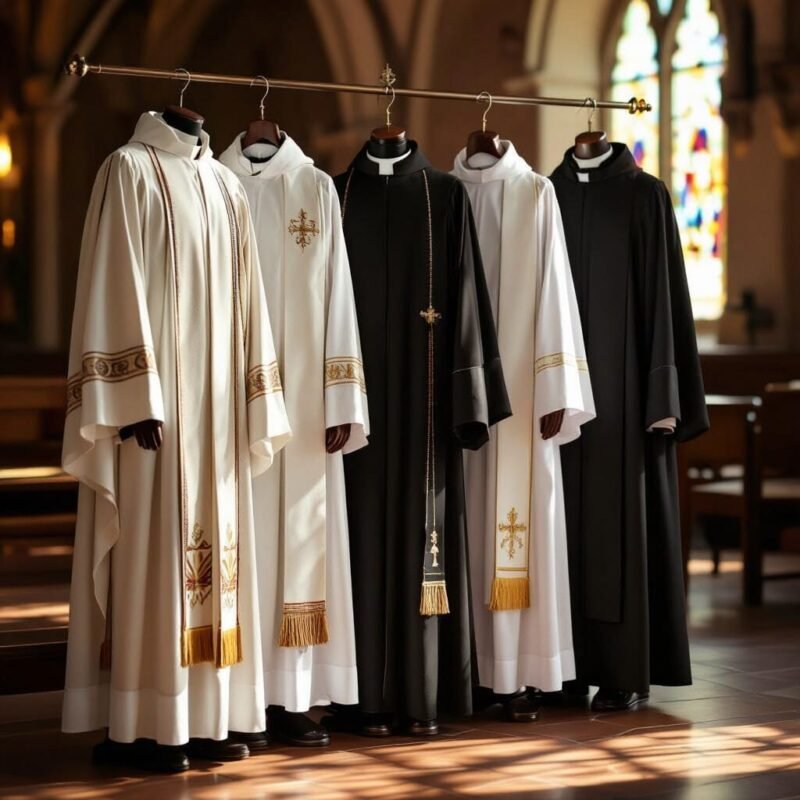

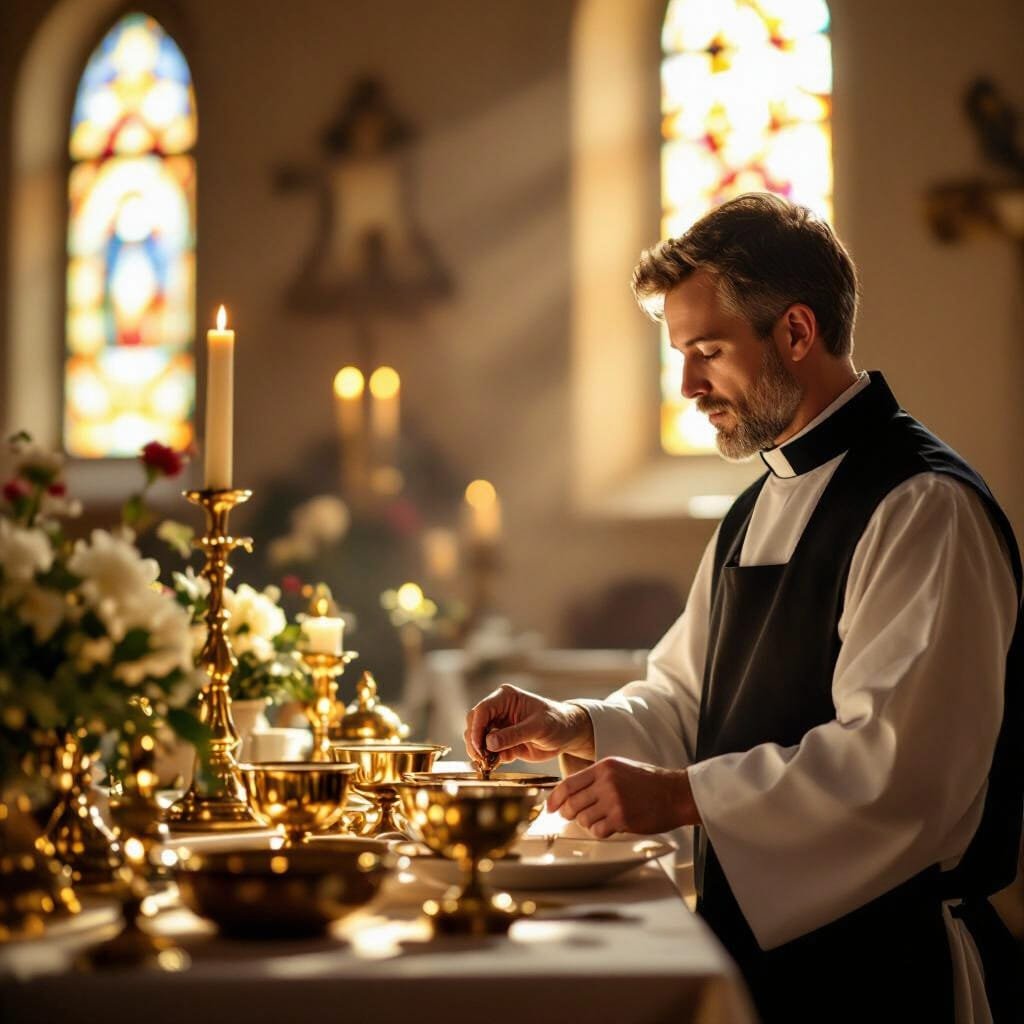
Among the garments that are used in ministries, some of them are very subtle in their communication. They do not attract attention with intricate embroidery or ceremonial forms. They are simple, humble, and caring through their presence and devotion daily. The clergy apron is one of these garments, as it is simple in design but very rich in symbolism. It is worn for sacred preparation and daily pastoral duties and serves as a reminder of Christ’s calling to serve others and not be served.
Clergy aprons are often left out when discussing vestments. However, they indicate an important aspect of ministry—the less visible, but still very important, work done in kitchens, fellowship halls, hospital rooms, and communion preparation spaces. These moments are when ministry becomes personal, compassionate, and very human.
The Meaning Behind the Clergy Apron
The clergy apron derives its symbolism from Christ’s actions. In the Gospel of John, Jesus kneels to wash His disciples’ feet and ties a towel around His waist. This act shows us that the true leader is the one who serves. The clergy apron sends the same message.
It is not just a garment worn as an accessory, but as a mirror of the inner self and one’s vocation. Pastors, deacons, and ministers don aprons for the activities that help worship and faith community—folding bulletins, preparing communion trays, arranging liturgical elements, or serving meals during outreach. The apron is a constant reminder for the minister and the congregation that ministry is not limited to the pulpit but also about presence, compassion, and sharing life.
For faithful clergy searching for impeccably tailored attire that reflects their daily devotion and dignity, the Men’s Clergy Aprons collection at Worship Attires is the solution, where the combination of practical, comfortable, and meaningful service is already made into the designs.
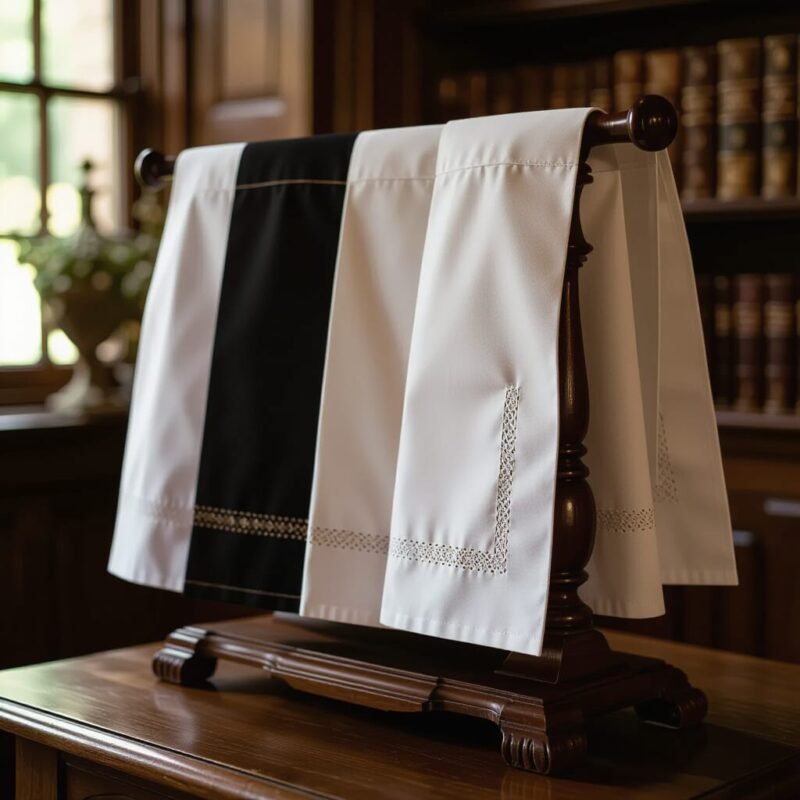
The Apron as a Liturgical Companion
Indeed, not being a common item for the formal liturgical act, the clergy’s apron is still present during and after the services, at the time of sacristy preparation, and on the whole, throughout the hospitality ministry. It is a connecting link between the holy space and the work done to support it.
The clergy apron has the following main purposes:
- Protection of the vestments during the handling of elements or candles
- The cleanliness of things while preparing the sacred objects
- The hospitality ministry’s graceful and professional support
- The reflection of the sacredness of the service, even in the practical responsibility
Thus, the apron possesses these qualities, and even very common tasks can be elevated to acts of reverence.
Combining the apron with the elegant clergy garments, such as surplices or cassocks, indicates that the best preparation is at least as sacred as the most perfect worship. A congregation looking for layering garments can look at Clergy Surplices for Men, which are specially designed to accompany the traditional ministry attire.
Clergy Aprons in Community and Outreach
Ministry does not only happen in the church. The clergy visit the sick in the hospital, comfort the families, lead the outreach meals, and organize the community gatherings. In such places, the dress must be both dignified and approachable.
The clergy apron thus becomes a sign of the common labor:
- Serving meals to those who are needy
- Getting ready for the coffee hour after the service
- Taking an active part in the community clean-up
- Providing other support during the fellowship gatherings
The wearing of the clergy apron indicates the presence, not as a figure of authority only, but as a person standing next to others.

For those women in ministry who, cutting across sacred and community spaces, are leading with grace and compassion, Clergy Robes for Women have very attractive design options. The focus is on comfort, freedom of movement, and professional elegance.
Style, Fit, and Function in Modern Clergy Aprons
The modern-day clergy aprons are designed with meticulous craftsmanship to make it easier for the wearers to serve for long hours:
- Fabrics that are strong yet gentle on the skin for movement and cleaning to be done with ease
- Ties that can be adjusted and necklines that are comfortable for personal fit
- Pockets that are practical for the ministry essentials that are small to carry
- Colors that are neutral and respectful to the liturgical
The supporting role of these design features to the clergy in their duties is always there, no matter where the place is.
Conclusion
A clergy apron is not the most outwardly visible garment in the ministry, yet it holds great significance. The service performed silently, the mercy offered without limit, and the humble soul of a shepherd taking care of his flock are the things the apron represents. Each stitch and each fold is a reminder of Christ’s model of servanthood and leadership.
Every apron that is tied around the waist of a minister, deacon, pastor, or chaplain is a declaration of the attractiveness of humble devotion, the devotion that is not only expressed through worship but also in the daily moments of care and grace.